Thunderbolts* Review - A Superhero Film about Mental Health
⭐️⭐️⭐️⭐️
It is fair to say that Marvel of late hasn't exactly astounded its viewers. With a confusing multiverse, lackluster CGI and unengaging storylines, many have seemingly lost track of the company's direction. With the box office disappointment of Captain America: Brave New World (grossing around $415 million on a budget of $180 million), it was clear a win was desperately needed.
And so came Thunderbolts*, an underdog story centred around a group of unlikely heroes struggling with their own identities and prior actions. Instead of focusing on ‘good’ and ‘evil’, Marvel's latest offering decides to analyse what it really means to do the right thing and whether the past defines who we wish to become.
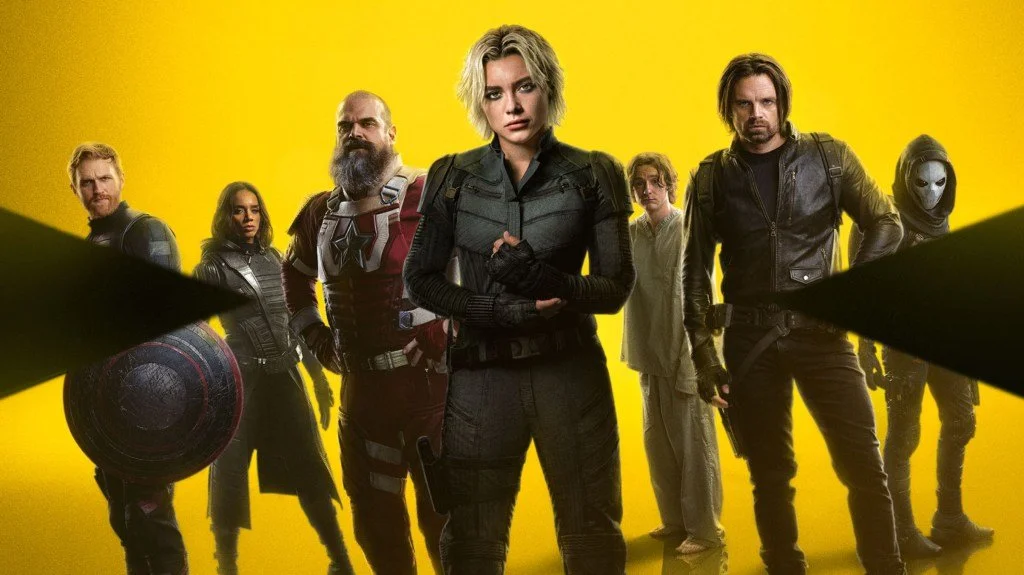
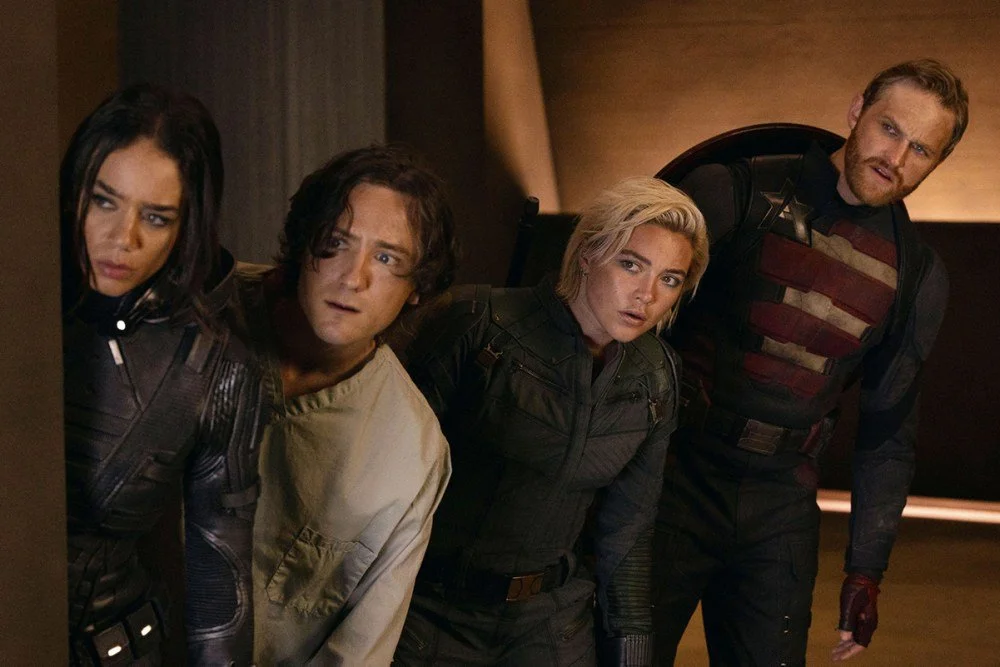
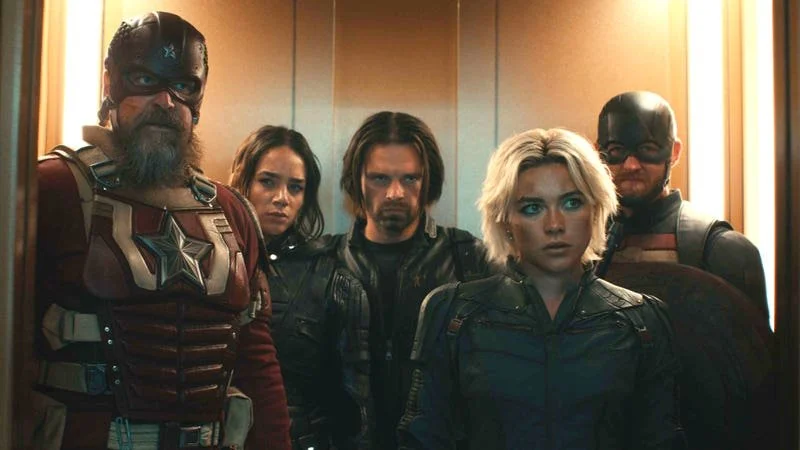
At the centre of the fray is the late Black Widow's sister Yelena Belova (Florence Pugh). Seeking a front-facing role away from the undercover missions assigned by Valentina Allegra de Fontaine (Julia Louis-Dreyfus), she continuously struggles with her conscience and loneliness. This endeavour for exposure however comes unconventionally as she's forced into an alliance with a group of misfits comparable to the Suicide Squad. Composed of Bucky Barnes (Sebastian Stan), John Walker (Wyatt Russel), Ava Starr (Hannah John-Kamen) and Yelena’s enthusiastic father Alexei Shostakov (David Harbour), the group's atypical nature makes it all the more lovable. Filled with perfectly timed digs and conflicts ranging from the ethics of stealing from a dead body to the most tragic backstory - the back and forth is reminiscent of the Avengers at its peak.
Do not be mistaken though, Thunderbolts* is not another rip-off parading as originality. Jake Schreier takes his time constructing his characters and underneath their sharp dialogue is an even deeper message which stretches beyond the realms of well-choreographed fight scenes and cruel comebacks. The audience are granted the time to invest without the interruption of an unnecessary roadblock in the form of a poorly integrated brawl or an explosion of CGI. Instead, every scene feels purposeful and well-placed, delicately world-building without having to explain the choices of previous movies.
Whilst the film does take its time to properly get going, it rewards its viewers once it does so with the introduction of newcomer Bob (Lewis Pullman) as ‘The Sentry’. Presented at first as a mild-mannered, sweet civilian with limited understanding of his whereabouts, the presumed weakest of the bunch proves to be more than anyone could bargain for. Through the superhuman flicker in his eyes and the consequences of making physical contact, Bob is gradually revealed to have more in common with our protagonists than first anticipated.
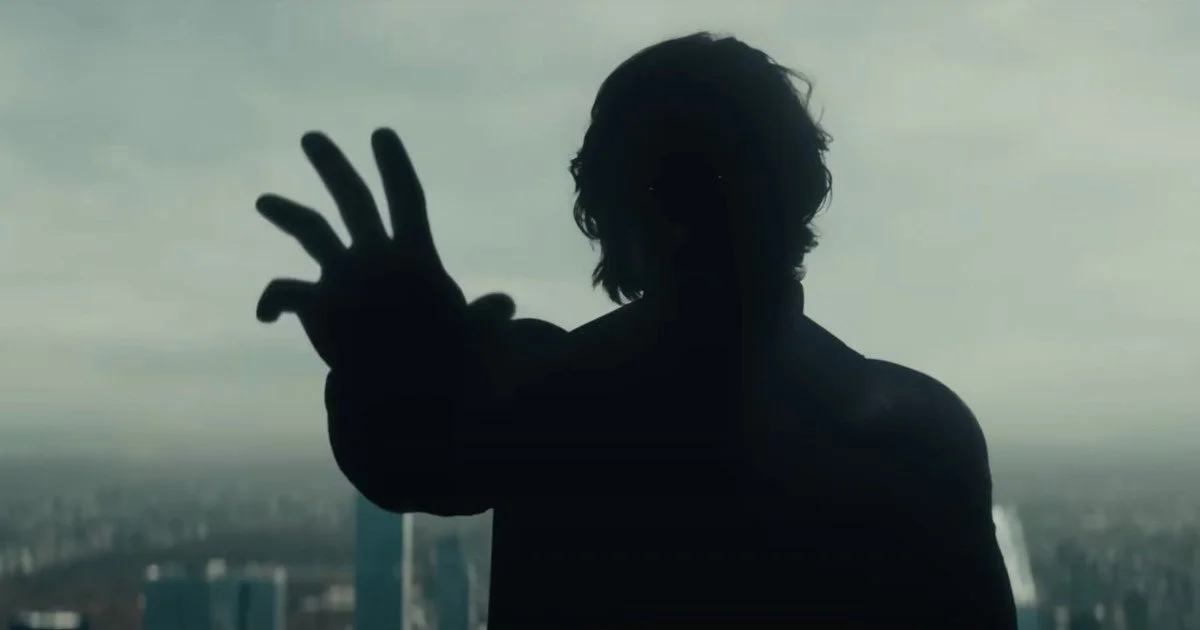
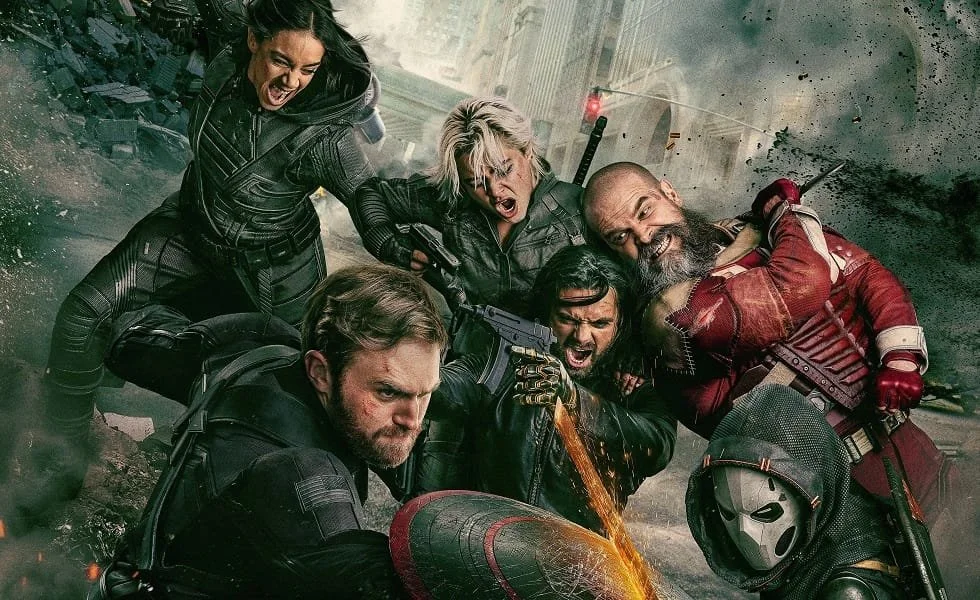
As a backstory of abuse, manipulation and clinical testing is uncovered, we delve into murkier waters regarding mental health and government corruption (a topic which is regularly visited in the Marvel cinematic universe). As a result, the bundle of nerves bystander is soon revealed to be somewhat of a Homelander-Superman mesh equipped with powers ranging from flight and telekinesis to invulnerability. Bob's uncontrollable alter-ego threatens the entirety of New York as ‘The Void’ takes over, leaving the mismatched group of anti-heroes the task of formulaically saving the day.
What comes next however is an intense and emotional finale which does not hide from the sentimental. Much like Guardians of The Galaxy Vol. 3 and Spiderman: No Way Home, Thunderbolts* seeks a poignant resolution which remains character-focused.
The success of this endeavour is majorly aided by the magnetism of its leading star Florence Pugh, who proves to have chemistry with every one of her co-stars. This in particular can be seen through the characters of Yelena and Bob, whose bond built on past trauma is stronger than most recent Marvel relationships. Pugh and Pullman are equally alluring and troubled yet manage to win the hearts of the audience through their vulnerability - a trait not commonly associated with your common superhero.
With the focus placed on these two, it can be argued that there's a lack of attention on the other characters as they're reduced to their smart mouths and combat skills, particularly evident in Hannah John-Kamen's portrayal of Ava Starr. Whilst embroiled in some amazing action sequences, her role is arguably the most shallow and underutilised (although this does fortunately allow for growth in future projects). Nevertheless, a lack of development is to be expected with an official runtime of 2 hours and 6 minutes - a refreshingly short feature for a company known for their longer productions.
Overall Thunderbolts* is everything which Marvel has been missing since Avengers: Endgame: a familiar cast, an abundance of chemistry and the correct balance of action versus sentimentality. With some stellar performances and a gritty undertone which never becomes overbearingly dark, Thunderbolts’ label as The New Avengers is not an insult to previous generations but instead a promising look towards the future.